Pages

Showing posts with label Native American Heritage. Show all posts

Wednesday, October 24, 2007

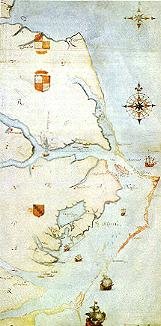
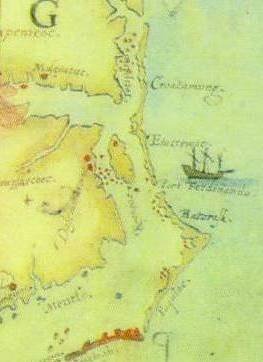
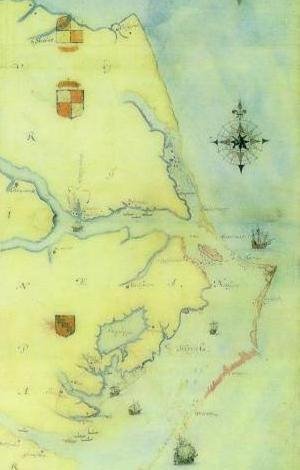
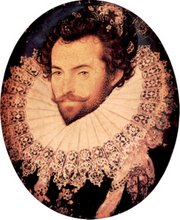
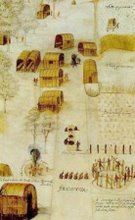
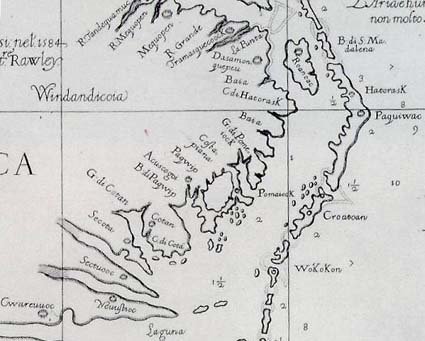
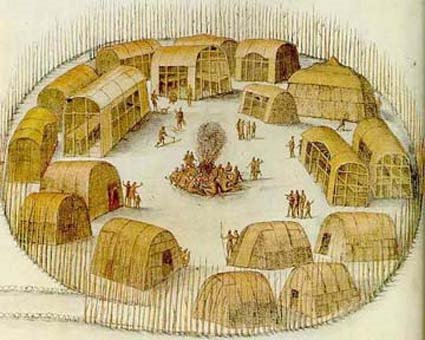
'Mysteries of the Lost Colonies' Opens at N.C. Museum of History


Programs planned to comple-ment exhibit.


The N.C. Museum of History will offer a variety of programs that complement the exhibition "Mysteries of the Lost Colony and A New World: England's First View of America from the British Museum," on view from Saturday, Oct. 20, to Jan. 13, 2008, in Raleigh. All programs are free, except the Curator's Tour on Saturday and the program on historic plants on Oct. 25.


"Mysteries of the Lost Colony" is presented by the N.C. Museum of History in collaboration with the Roanoke Island Historical Association, producer of the outdoor drama "The Lost Colony."


"A New World: England's First View of America" is presented in collaboration with the British Museum. For ticket information, call (919) 807-7900 or go to http://www.ncmuseumofhistory.org/.


• Curator's Tour: "A New World: England's First View of America," Saturday, Oct. 20, 2 p.m. A ticket to "Mysteries of the Lost Colony and A New World: England's First View of America" is required. (Free for associates members.) Presented by Kim Sloan, curator of "British Drawings and Watercolours Before 1880" and Francis Finlay, curator of the Enlightenment Gallery, British Museum. The paintings of John White gave the Elizabethan world its first glimpse of America. Join the exhibition curator for a special look at Mr. White's works.


• "Historic Plants of Colonial America," Thursday, Oct. 25, 2-4 p.m., $15 ($10 associates members). The program will take place at the Doris Duke Center, Sarah P. Duke Gardens, Durham. To register, call (919) 730-2503. Presented by Mark McVicker, nursery manager, Thomas Jefferson Center for Historic Plants. Botanists John Clayton, AndrĂ© Michaux and John and William Bartram were instrumental in discovering many plants in North America and introducing them to colonial and European gardens. Mr. McVicker will discuss the impact and significance of their finds. The program is presented in conjunction with the Sarah P. Duke Gardens.


• "What Happened to the Lost Colony?," Saturday, Oct. 27, 2 p.m. To register, call (919) 807-7992 by Oct. 24. Presented by David LaVere, professor of history, University of North Carolina at Wilmington. "The Lost Colony" is North Carolina's legendary whodunit. Join Mr. LaVere as he presents his theory about this centuries-old unsolved mystery.


• "A Very Cold Case: A Progress Report on the Search for the Lost Colonists," Saturday, Nov. 10, 2 p.m., To register, call (919) 807-7992 by Nov. 8. Presented by Dr. Charles Ewen, professor of anthropology and director of Archaeology Laboratories, East Carolina University. Drawing upon recent archaeological research, Dr. Ewen will examine several theories concerning what happened to the colonists at Roanoke Island.


The N.C. Museum of History's hours are Tuesdays through Saturdays from 9 a.m. to 5 p.m., and Sunday from noon to 5 p.m. From Saturday, Oct. 20, through Jan. 13, 2008, the museum will be open on Mondays from 9 a.m. to 5 p.m. Admission is free.

The museum is part of the Division of State History Museums, Office of Archives and History, an agency of the N.C. Department of Cultural Resources. The department's Web site is http://www.ncculture.com/.

Sunday, October 7, 2007

Proving Your Native American Heritage


Copyright 2007, Roberta Estes, all rights reserved
http://www.dnaexplain.com/

Many American families carry oral histories of Native American heritage. Most often, we think of either the Western tribes who still reside in or near their indigenous homes, or the Cherokee who were displaced in the 1830s, forced to march from Appalachia to Oklahoma in the dead of winter, an event subsequently known as the Trail of Tears.

In truth, the history of Native American heritage in North America is much, much more complex. It is probable that many of the people who carry oral history of “Cherokee heritage” are actually descended from a tribe other than the Cherokee initially. The Cherokee were well known for accepting remnants of other tribes whose members and numbers had been decimated by disease or war. Sometimes these alliances were created for mutual protection.

The Cherokees were not the only tribe in the Eastern United States. The Eastern seaboard was widely populated by varying tribes, some related and affiliated, and some not. There were in fact three major language groupings, Algonquin, Souian and Iroquoian scattered throughout the Eastern seaboard northward into Canada, westward to Appalachia and south to the Gulf of Mexico.

People from Africa were also imported very early, often, but not always, as slaves. Jamestown shows evidence of individuals of African heritage. Those who were later brought specifically as slaves sometimes ran away, escaping into the Native population. Conversely, Indians were often taken or sold by defeating tribes into slavery as well.

In the early years of settlement, European women were scarce. Some men immigrated with wives and families, but most did not, and few women came alone. Therefore, with nature taking its course, it is not unreasonable to surmise that many of the early settlers traded with, worked alongside and married into indigenous families, especially immigrants who were not wealthy. Wealthy individuals traveled back and forth across the Atlantic and could bring a bride on a subsequent journey.

Further complicating matters, there were numerous “lost” individuals of varying ethnicity in the very early years of colonization. Specifically, Juan Pardo established forts in many southern states from Florida to Mexico beginning in 1566. The Spanish settled Florida and explored the interior beginning in 1521, settling Santa Elena Island in present day South Carolina from 1566-1576. Their forays extended as far North as present day East Tennessee. In 1569, 3 English men arrived in Cape Breton, Nova Scotia having set out on foot with 100 men 4000 miles earlier in Tampico, Mexico. These individuals are in addition to the well-known Lost Colony of Roanoke, and the less well-known earlier military expeditions on which several individuals were “lost” or left behind.

What does this mean to the family historian who is trying to prove their genealogy and understand better just who they are and where they come from?

If your family has a long-standing oral history of Native American heritage, it is probably true. Historically, Native people were classified as “non-white” which severely limited (and sometimes prevented) their ability to function as free, white, people with equal rights. This means that free “people of color” often could not vote, could not own land, and could not attend schools along with white people, if at all.

Furthermore, laws varied and how much non-white heritage constituting “people of color” ranged from the infamous “one drop” rule to lesser admixture, sometimes much more liberal, to only the third generation. In essence, as soon as individuals could become or pass for “white” they did. It was socially and financially advantageous. It is not unusual to find a family who moved from one location to another, often westward, and while they were classified as mulatto in their old home, they were white in their new location.

Often there were only three or sometimes four classifications available, white, negro or black, mulatto and Indian. Sometimes Indian was a good thing to be, because in some colonial states, Indians weren’t taxed. However, this also means their existence in a particular area often went unrecorded.

Any classification other than white meant in terms of social and legal status that these people were lesser citizens. Therefore, Native American or other heritage that was not visually obvious was hidden and whispered about, sometimes renamed to much less emotionally and socially charged monikers, such as Black Dutch, Black Irish and possibly also Portuguese.

For genalogists who are lucky, there are records confirming their genealogy, such as the Dawes Rolls and other legal documents. More often, there are only hints, if even that, such as a census where an ancestor is listed as mulatto, or some other document that hints at their heritage. Most often though, the stories are very vague, and were whispered or hidden for generations. References may be oral or found in old letters or documents. Supporting documentation is often missing.

Many times, it was the woman of the couple who was admixed initially, of course leading to admixed children, but with 50% less admixture than their mixed parent. It was much more common for a male of European stock to intermarry with Native or admixed women, rather than the other way around.

This means to genetic genealogists today, that they are likely to meet with frustration when attempting to document Native heritage in a male line.

Let’s take a look at why this is and how we can build a DNA pedigree chart to track our ancestry.

Continue here:
http://www.genpage.com/Native_American_Heritage.html#Continued