In a show produced by a local man, archaeologists say Spanish artifacts in western N.C. predate 'Lost Colony'
Click-2-Listen
By Ginger LivingstonThe Daily Reflector
Thursday, January 31, 2008
A public television show produced by a local man and airing tonight (repeats Sunday) features archeological work that could change how North Carolinians view the early history of the state.
"The First Lost Colony" is the segment airing locally at 8:30 p.m. on UNC-TV's "Exploring North Carolina" on Suddenlink channel 4. The show was co-produced and photographed by Pitt County resident Joe Albea.
Archaeologists studying the site of a 16th century Spanish fort in Burke County have found pottery shards from olive jars, finishing nails and lead balls used in muskets.
"The First Lost Colony" examines the work archeologists from North Carolina, South Carolina and Illinois are doing at a Burke County farm. Scientists are certain it is the location of Fort San Juan, one of five colonies the Spanish established in the interior United States about 20 years before the British sent its failed colony to Roanoke Island in what is now Dare County. That group of men and women became the storied "Lost Colony" that vanished, leaving only the word "Croatoan" carved on a tree.
"The 16th century for the large part is forgotten but there was a lot of exploration of the continent at that time," Albea said.
The N.C. Natural History Museum hosted a premiere of the show Wednesday night in Raleigh. About 250 attended the event, including the site's discoverer, Warren Wilson College professor and archeologist David Moore, and his colleagues Robin Beck with Southern Illinois University and Christopher Rodning with the University of North Carolina at Chapel Hill.
http://www.archaeologynews.org/story.asp?ID=259706&Title=In%20a%20show%20produced%20by%20a%20local%20man,%20archaeologists%20say%20Spanish%20...
To read more about the work at the Berry site, visit http://www.warren-wilson.edu/~storyteller/NEWS/NEWS-jbowers-2006-9-14-11-2-53.shtml
Read more:
http://www.worldsedge.net/desoto/BECK_FROM%20JOARA%20TO%20CHIAHA.htm
http://64.233.167.104/search?q=cache:GLvXxydhHfYJ:www.ncmuseumofhistory.org/collateral/articles/F05.first.people.pdf+de+soto+fort+burke+county&hl=en&ct=clnk&cd=4&gl=us
Sunday, February 3, 2008
"The First Colony" Television Show's Last Broadcast Tonight

Thursday, January 31, 2008
De Soto's Fort Located?
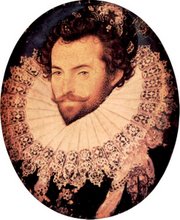
If Hernando de Soto and Juan Pardo had been successful and established a series of permanent settlements, we might all be speaking Spanish in this country rather than English. That’s one conclusion that archeologist Rob Beck of the University of Oklahoma likes to tell people about when he describes the discovery of Fort San Juan on the upper Catawba River in Burke County north of Morganton.That fort was established by de Soto’s men in 1567 – a couple of decades before Sir Walter Raleigh’s expedition set out from England and established a colony on Roanoke Island that disappeared – and became known as the Lost Colony.
The Fort San Juan story is told in a new episode of UNC-TV’s “Exploring North Carolina” series produced by narrator Tom Earnhardt of Raleigh and videographer Joe Albea of Greenville. It airs tonight at 8:30 p.m. and repeats Friday, Feb. 1 at 9:30 p.m. and Sunday, Feb. 3 at 6 p.m.The program describes how Beck and other archeologists, including David Moore of Warren Wilson College near Asheville and Christopher Rodning of Tulane, assembled the evidence that linked the 12-acre site in Burke County to a known site at Parris Island. S.C., where Spanish explorers established a fort in what then was called northern Florida.
Continued here:
http://jackbetts.blogspot.com/2008/01/was-first-lost-colony-in-burke-county.html