Roberta Estes
This blog is © History Chasers
Click here to view all recent Lost Colony Research Group Blog posts
~ History ~ Genealogy ~ Archaeology ~
Posted by
Historical Melungeons
at
1/15/2012 11:24:00 AM
Labels: Jamestown, lost colony, surname
The newly-discovered tobacco pipe found in the wellExcavations have concluded on a mid-17th-century well located in the southwest corner of James Fort's 1608 church. Several artifacts were found in the bottom of the well including a hoe blade stamped with a maker's mark, a pewter spoon also bearing a maker's mark, an axe head, a decorated pipe bowl, fragments of a leather shoe, and dozens of animal bones. These artifacts are in remarkable condition due to the fact that they've remained submerged below the water table for over 300 years. Though the well is located just inside the southwest corner of the church, its position is merely coincidental, as the church had been torn down decades before the construction of the well.
The hoe blade and axe headThe wells at Jamestown have yielded a remarkable array of artifacts, in large part due to the fact that they were used as trash dumps once they ceased to be used as a water source. The excavations of this well have turned up substantially fewer artifacts than those of previous wells. This may indicate a well that was in private rather than public use. Its small diameter and its mid-17th-century construction date may give credence to this theory. By this time, James Fort had expanded to become Jamestown, and its land was largely held in private hands. If this well was indeed a private one, there were probably less people using it while it was a water source and less people using it as a trash dump once the water turned sour (which probably didn't take too long given its proximity to the brackish James River). That being said, while there were less artifacts found overall, there were still a substantial number of artifacts found at all levels of the well excavation. Finds discovered above the water table include human teeth, beads, pipe fragments, and a portion of a crucible.
Cont.
http://www.historicjamestowne.org/the_dig/
This blog is © History Chasers
Click here to view all recent Lost Colony Research Group Blog posts
Posted by
Historical Melungeons
at
11/23/2011 12:43:00 PM
Posted by
Historical Melungeons
at
12/13/2010 04:22:00 PM
by Janet Crain
By all accounts Fort St. George, in present day Maine, should have succeeded. It was well financed and expertly planned.Established in 1607, it was intended to contain thick battlements, great crenellated gates, several mansions, a church, fifty other buildings, and a walled garden. A dozen cannon pointed toward the sea.
The fort was the brainchild of Sir John Popham, one of the most important and powerful men in England during Queen Elizabeth I's reign. He intended to solve one of England's biggest problem; a huge surplus population of destitute people with no means of support.
Convinced this situation was the primary cause of crime, Sir Popham wanted to sweep up the "dregs" of England and put them to work in the new world earning their keep.
At this time tinkers, vagabonds, gypsies, and wandering artists and actors were considered as prime candidates for this "benefit" to be bestowed upon them, along with felons, and prostitutes, pickpockets and highway men.
Fort St. George was built entirely with enforced transported labor. Later called indentured servitude, this system is American history's best kept secret. Later the European servants were joined by Africans and Indians. There was no difference in their treatment or status. Some had kind masters, many had harsh cruel masters. Only after Bacon's rebellion would the races be treated differently.
Even Thomas Jefferson was deluded when he wrote that only about 2,000 convicts were transported to America and they were mostly sickly men who soon died and left no descendants. In truth there many many more. Add to them those transported for trivial reasons, those sold into servitude by captors, masters or themselves and the unknown number dumped here by Cromwell and it's clear that most of us have these people numbered among our ancestors. Rather than deny them, we should celebrate their will to survive and honor them.
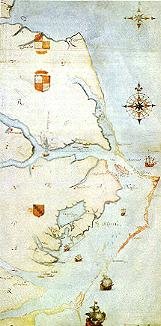
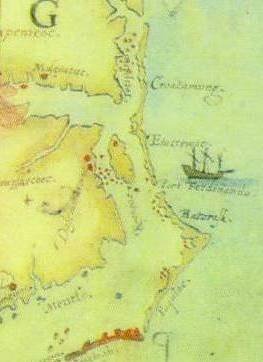
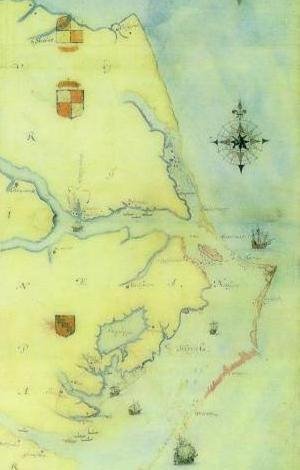
Everything we learn about Jamestown and Fort St. George sheds light on the First Colony at Roanoke. This map is therefore of great interest. The men who planned these settlements, sailed the ships, explored our shores and inland areas were contemporaries. Back in England they knew each other well. They may have schemed and plotted against each other in the Elizabethan Court and later that of King James, but they were cut from the same cloth. And their motives were similar. It was not altruism that brought about this new nation.
Fort St. George, named for the patron saint of England, was built in 1607 by Popham Colony near Sabino Head, ten miles/15 kilometres south of what is now Bath, Maine, United States. It was abandoned after a year of occupation and is now an archaeological site. [1] [2]
John Hunt, a draughtsman present at the fort when it was built, drew a map showing[3] a star-shaped fort including ditches and ramparts, a storehouse, a chapel and more than fifteen structures. It contained nine guns that ranged in size from demi-culverin to falcon. As a result of espionage by the Spanish ambassador to London, Pedro de Zuniga, the map was passed to King Philip III of Spain, in 1608.[4] It was found in 1888 in a Spanish archive. [5] It is unique as the only plan of an initial English settlement in the Americas known to survive.
Related:
http://historical-melungeons.blogspot.com/2008/07/on-misfortune-of-indentured-servants.html
Posted by
Historical Melungeons
at
1/15/2010 04:11:00 PM
Labels: fort st. george, Jamestown, Lost Colony Roanoke, popham
The new world was discovered by a Spanish Navigator, North America was colonized by the Vikings, Spain, Portugal and France, its rich Outer Banks fished by the Basque and other nations, but eventually it became a predominately English speaking continent. And 13 small colonies became the United States.
How did this come about? Who were the major players?
Almost four hundred years ago a group of families from England built the first permanent settlement on the shores of the New World. This town Jamestown, Virginia, named after James I, the King of England. Jamestown was not the first English colony in Virginia, but it had been the first one to be successful. Twenty years earlier, a colony had been started about one hundred miles south of Jamestown, on Roanoke Island that proved to be unsuccessful.
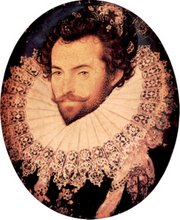
On March 25, 1584, Walter Raleigh obtained from Queen Elizabeth a patent to “discover, search, find out, and view” any lands “not actually possessed of any Christian prince, nor inhabited by Christian people.” The patent was approved to “go or travel thither to inhabited or remained, there to build and fortified” for a period of six years.
Within a month Walter Raleigh had dispatched a fleet of two ships commanded by Captains Philip Amadas and Arthur Barlowe. They sailed from London on April 27th through the West Indies and sighted land off our coast on the 4th of July 1584. Philip Amadas and Arthur Barlowe entered Pamlico Sound at Ocracoke Inlet and a few days later Barlowe and eight of his men reached Roanoke Island. From early July until mid September a small band of men explored the region as best they could, traded with the Indians, and observed such things as the plants, the soil, the animals, and recorded everything that they could possibly learn about Indians and their way of life.
Posted by
Historical Melungeons
at
11/24/2009 12:09:00 PM
Labels: Jamestown, Lost Colony of Roanoke, roanoke
"There is but one entrance by sea into this country, and that is at the mouth of a very goodly bay, 18 or 20 miles broad. The cape on the south is called Cape Henry, in honor of our most noble Prince. The land, white hilly sands like unto the Downs, and all along the shores rest plenty of pines and firs ... Within is a country that may have the prerogative over the most pleasant places known, for large and pleasant navigable rivers, heaven and earth never agreed better to frame a place for man's habitation..."- Captain John Smith, 1612 Smith's Journey
Posted by
Historical Melungeons
at
2/17/2009 10:32:00 AM
Labels: chesapeake, Jamestown, john smith, lost colonists, Lost Colony Roanoke
William Strachey, first secretary of the Jamestown colony, wrote a history of that colony in 1612. In it, he mentioned several rumors about the fate of the colonists who had disappeared from Roanoke twenty years before.
Here Strachey explains the colonists’ attitudes toward the Indians, which are fortified by what they believe happened to their predecessors at Roanoke.
For the apter enabling of our selfes unto which so heavenly an enterprise, who will thinck yt an unlawfull act to fortefie and strengthen our selves (as nature requires) with the best helpes, and by sitting downe with guardes and forces about us in the wast and vast unhabited growndes of their[s], amongst a world of which not one foote of a thousand doe they either use, or knowe howe to turne to any benefitt; and therfore lyes so great a circuit vayne and idle before them? Nor is this any injurye unto them, from whome we will not forceably take of their provision and labours, nor make rape of what they dense and manure; but prepare and breake up newe growndes, and therby open unto them likewise a newe waye of thrift or husbandry; for as a righteous man (according to Solomon) ought to regard the lief of his beast, so surely Christian men should not shew themselves like wolves to devoure, who cannot forget that every soule which God hath sealed for himself he hath done yt with the print of charity and compassion; and therefore even every foote of land which we shall take unto our use, we will bargaine and buy of them, for copper, hatchetts, and such like comodityes, for which they will even sell themselves, and with which they can purchace double that quantity from their neighbours; and thus we will commune and entreate with them, truck, and barter, our commodityes for theires, and theires for ours (of which they seeme more faine) in all love and freindship, untill, for our good purposes towards them, we shall finde them practize violence or treason against us (as they have done to our other colony at Roanoak): when then, I would gladly knowe (of such who presume to knowe all things), whether we maye stand upon our owne innocency or no, or hold yt a scruple in humanitye, or any breach of charity (to prevent our owne throats from the cutting), to drawe our swordes, et vim vi repellere? (pp. 19–20)
Seven colonists, including a “young mayde,” apparently escaped the slaughter. The maid may have made a further escape.
This high land is, in all likelyhoodes, a pleasant tract, and the mowld fruictfull, especially what may lye to the soward; where, at Peccarecamek and Ochanahoen, by the relation of Machumps, the people have howses built with stone walles, and one story above another, so taught them by those Englishe whoe escaped the slaughter at Roanoak, at what tyme this our colony, under the conduct of Capt. Newport, landed within the Chesapeake Bay, where the people breed up tame turkeis about their howses, and take apes in the mountaines, and where, at Ritanoe, the Weroance Eyanoco preserved seven of the English alive — fower men, two boyes, and one yonge mayde (who escaped and fled up the river of Chanoke [Chowan]), to beat his copper, of which he hath certaine mynes at the said Ritanoe, as also at Pamawauk are said to be store of salt stones. (p. 26)
Strachey explains what happened to the colonists after they left Roanoke.
[H]is majestie [James I] hath bene acquainted, that the men, women, and childrene of the first plantation at Roanoak were by practize and comaundement of Powhatan (he himself perswaded therunto by his priests) miserably slaughtered, without any offence given him either by the first planted (who twenty and od yeares had peaceably lyved intermixt with those salvages, and were out of his territory) or by those who nowe are come to inhabite some parte of his desarte lands, and to trade with him for some comodityes of ours, which he and his people stand in want of; notwithstanding, because his majestie is, of all the world, the most just and the most mercifull prince, he hath given order that Powhatan himself, with the weroances and all the people, shalbe spared, and revenge only taken upon his Quiyoughquisocks, by whose advise and perswasions was exercised that bloudy cruelty… (pp. 85–86)
continue here
Posted by
Historical Melungeons
at
8/01/2008 08:45:00 PM
Labels: Jamestown, lost colony, William Strachey
In the interest of a balanced viewpoint, this blog will occasionally publish op-ed articles by guest authors. These articles may not, necessarily, reflect the opinion of the editors.
Surname-Source
Allen -- Colonist roster
Alligood -- Families of Interest
Archard-- Colonist roster
Archard -- Families of Interest
Armstrong -- Families of Interest
Arthur -- Colonist roster
Austin -- Families of Interest
Bailie -- Colonist roster
Barber, Barbour -- Families of Interest
Barrow -- Families of Interest
Beasley -- Families of Interest
Bennet -- Colonist roster
Bennet -- Families of Interest
Berde -- Colonist roster
Berry -- Families of Interest
Berrye -- Colonist roster
Bishop -- Colonist roster
Blount -- Families of Interest
Borden -- Colonist roster
Boyd -- Families of Interest
Bragg -- Families of Interest
Bridger -- Colonist roster
Bridger -- Families of Interest
Bright -- Colonist roster
Bright -- Families of Interest
Brooke -- Colonist roster
Brooks -- Families of Interest
Browne -- Colonist roster
Bryant -- Families of Interest
Buck -- Families of Interest
Burden -- Colonist roster
Butler -- Colonist roster
Butler -- Families of Interest
Cage -- Colonist roster
Cahoon -- Families of Interest
Cain -- Families of Interest
Carawan -- Families of Interest
Caroon, Carron -- Families of Interest
Carrow -- Families of Interest
Chapman -- Colonist roster
Chapman -- Families of Interest
Chavis -- Families of Interest
Cherry -- Families of Interest
Cheven -- Colonist roster
Collins -- Families of Interest
Colman -- Colonist roster
Cooper -- Colonist roster
Cooper -- Families of Interest
Cotsmur -- Colonist roster
Cox -- Families of Interest
Crisp -- Families of Interest
Croom -- Families of Interest
Cuttler -- Families of Interest
Daniel -- Families of Interest
Dare -- Colonist roster
Darige -- Colonist roster
Darige -- Families of Interest
Dixon -- Families of Interest
Dorrell -- Colonist roster
Durrance -- Families of Interest
Durrant -- Families of Interest
Dutton -- Colonist roster
Earnest -- -- Colonist roster
Edwards -- Families of Interest
Elks -- Families of Interest
Ellis -- Colonist roster
Ellis -- Families of Interest
English -- Colonist roster
Evans --Families of Interest
Farre -- Colonist roster
Farrow -- Families of Interest
Fitspatric -- Families of Interest
Florrie -- Colonist roster
Forbs -- Families of Interest
Gaylord -- Families of Interest
Gibbes -- Colonist roster
Gibbs -- Families of Interest
Glane -- Colonist roster
Gramme -- Colonist roster
Griffin -- Families of Interest
Gurganus -- Families of Interest
Gurkin -- Families of Interest
Hardison -- Families of Interest
Harris -- Colonist roster
Harris -- Families of Interest
Harviem -- Colonist roster
Harvie -- Families of Interest
Harvye -- Colonist roster
Hassell --Families of Interest
Hawkins --Families of Interest
Hedgepath -- Families of Interest
Hemmington -- Colonist roster
Hewet -- Colonist roster
Hill -- Families of Interest
Hodges -- Families of Interest
Howe -- Colonist roster
Hudson -- Families of Interest
Humfrey -- Colonist roster
Hynde -- Colonist roster
Jackson -- Families of Interest
Jennette --Families of Interest
Jerkins -- Families of Interest
Johnson -- Colonist roster
Johnson -- Families of Interest
Jones -- Colonist roster
Jones -- Families of Interest
Kemme -- Colonist roster
Keys -- Families of Interest
King -- Families of Interest
Lasie -- Colonist roster
Lathan -- Families of Interest
Lawrence -- Colonist roster
Leary -- Families of Interest
Little -- Colonist roster
Long -- Families of Interest
Lowery -- Families of Interest
Lucas -- Colonist roster
Lucus -- Families of Interest
Mackey -- Families of Interest
Mann -- Families of Interest
Mannering -- Colonist roster
Martyn -- Colonist roster
Mayo -- Families of Interest
McCoy -- Families of Interest
Merrimoth -- Colonist roster
Midgette -- Families of Interest
Moor -- Families of Interest
Mullins -- Families of Interest
Myllet -- Colonist roster
Mylton -- Colonist roster
Newton -- Colonist roster
Nicholas -- Families of Interest
Nicholes -- Colonist roster
Nicols -- Families of Interest
Norman -- Families of Interest
Padgett -- Families of Interest
Pain -- Families of Interest
Paramore -- Families of Interest
Patrick -- Families of Interest
Pattenson -- Colonist roster
Payne -- Colonist roster
Payne -- Families of Interest
Perry -- Families of Interest
Phevans -- Families of Interest
Phevens -- Colonist roster
Philpatrick -- Families of Interest
Pierce -- Colonist roster
Pierce -- Families of Interest
Pinkham -- Families of Interest
Pollock -- Families of Interest
Powell -- Colonist roster
Powell -- Families of Interest
Prat -- Colonist roster
Pugh -- Families of Interest
Respass -- Families of Interest
Ricks -- Families of Interest
Rollinson -- Families of Interest
Rufoote -- Colonist roster
Russell -- Families of Interest
Salter -- Families of Interest
Sampson -- Colonist roster
Sawer -- Families of Interest
Scot -- Colonist roster
Scot -- Families of Interest
Shaberdge -- Colonist roster
Shephard -- Families of Interest
Simmons -- Families of Interest
Smart -- -- Colonist roster
Smith -- Colonist roster
Smith -- Families of Interest
Smart -- Colonist roster
Sole -- Colonist roster
Sparrow -- Families of Interest
Spendlove -- Colonist roster
Spenser -- Families of Interest
Squires --Families of Interest
Starte -- Colonist roster
Stevens -- Colonist roster
Stevens -- Families of Interest
Stilman -- Colonist roster
Stilman -- Families of Interest
Sutton -- Colonist roster
Sutton -- Families of Interest
Swann -- Families of Interest
Tan -- Families of Interest
Tappan --Colonist roster
Tarkington -- Families of Interest
Taverner -- Colonist roster
Taylor -- Colonist roster
Tetterton -- Families of Interest
Thomas -- Families of Interest
Tom, Toms -- Families of Interest
Tomkins -- Colonist roster
Topan -- Colonist roster
Tuley -- Families of Interest
Turner -- Families of Interest
Tydway -- Colonist roster
Viccars -- Colonist roster
Viccars -- Families of Interest
Wahab -- Families of Interest
Wallis -- Families of Interest
Warner -- Colonist roster
Warren -- Colonist roster
Warren -- Families of Interest
Waters -- Colonist roster
Waters -- Families of Interest
Welch(s) -- Families of Interest
White -- Colonist roster
White -- Families of Interest
Wildye -- Colonist roster
Wilkinson -- Colonist roster
Willes -- Colonist roster
Williams -- Families of Interest
Wood -- Colonist roster
Woolard -- Families of Interest
Wotton -- Colonist roster
Wright -- Colonist roster
Wyles -- Colonist roster
Wyles -- Families of Interest
Wythers -- Colonist roster