Pages

Tuesday, January 3, 2012

23andMe Beseiged with Complaints

When 23andMe started selling the kits that included genealogy matching results, there was no subscription fee.  You paid once and that was it.  About 18 months ago, they started selling an "upgrade" and along with that upgrade came a monthly fee to continue receiving updates.  At that time, they stated that if you stopped paying the fee after a year's commitment, you would not receive any new health updates nor matches, but the ones you had at the time you stopped paying would remain. 
 
Dick Eastman covers this here:


Now, they have reversed their position and before Christmas announced that they will no longer honor their committment.  If you allow your monthly subscription to lapse, which has increased from $5 per month to $9 per month, you will no longer have access to your results at all.  The genetic genealogy community has banded together to voice our displeasure with their intended failure to honor their initial commitment by creating a petition that we are signing.
The petition can be found at:


I encourage everyone to sign this petition.  I have.

I am also voting with my money and I no longer encourage people to test at 23andMe.  Family Tree DNA provides this same test for genealogists, without the health info obviously, and there is no subscription fee on top of the initial test price of $99.  $9 per month is $108 per year and it has risen from $60 per year, a price jump of $56% in one fell swoop. 
 
I feel that 23andMe is not being a good corporate citizen by changing their policies and then trying to pretend they were always that way. 
 
Roberta Estes


This blog is © History Chasers
Click here to view all recent Lost Colony Research Group Blog posts
Bookmark and Share

Monday, January 2, 2012

Lost Colony Research Group volunteers, grad students, and Outer Banks locals at an archaeological dig site on Hatteras Island


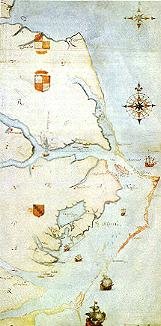
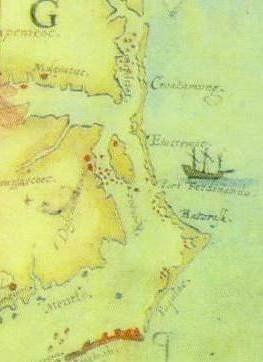
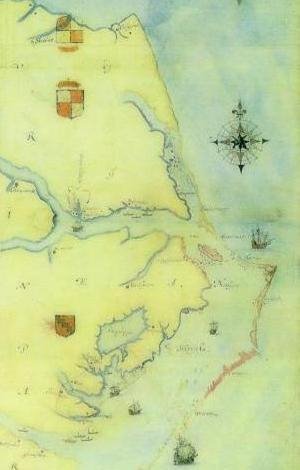
The legend of the Lost Colony of Roanoke has haunted American history for centuries. In July 1587, a British colonist named John White accompanied 117 people to settle a small island sheltered within the barrier islands of what would become North Carolina’s Outer Banks. When conditions proved harsher than anticipated, White agreed to sail back to Britain to shore up the settlement’s supplies—a trip that should have lasted a few months.

When White belatedly returned in 1590, the colonists had vanished—more than 100 men, women, and young children, their shelters and belongings, all gone. According to White’s writings, the only trace they left behind was a structure of tree trunks, with a single word carved into one post: CROATOAN.

The creepiness of the Lost Colonists’ disappearance didn’t discourage future American settlement. Nor has the lack of clues about their fate discouraged professional and amateur historians from trying to figure out what happened to them.

Archaeological digs, weather records, historical writings, genealogy—none have fully answered the question of what happened during White’s absence. But Roberta Estes, who owns DNAeXplain, a company that interprets the results of genetic heritage tests, is looking to DNA for help. Her hypothesis is that the Lost Colonists survived, and that evidence of their salvation is tucked away in the mitochondrial or Y chromosomal DNA of living descendants.

“They were stranded,” Estes says of the settlers. “They knew they couldn’t survive there on the island.” The colonists’ solution, in her estimation, was to go native.

“Croatoan,” Estes explains, was a message to White indicating that the colonists had gone to live with the Croatan Indians who lived on nearby Hatteras Island. Estes’s volunteer organization, the Lost Colony Research Group, is recruiting people from the area to submit DNA samples and family histories to test her theory.

Studying patterns of short tandem repeats (STRs) on the Y chromosomes of living men can determine whether they are likely to share a common ancestor that was a member of the Lost Colony. For example, Estes can compare the STR profile of a man whose family history suggests that his ancestors lived on Hatteras Island in the 17th century against genetic databases to see if he’s related to anyone with a Lost Colonist surname, such as Dare, Hewet, or Rufoote.

Additionally, it’s possible to scan that man’s mitochondrial or Y chromosomal DNA for evidence of Native American heritage, creating a clearer picture of what became of the vanished colonists. “It is true that with Y chromosome and mitochondrial DNA you can assign them unequivocally to different ethnic groups,” says Ugo Perego, a senior researcher at the Sorenson Molecular Genealogy Foundation. But, he adds, it would be difficult to tell exactly when the European ancestry was introduced.

Estes has amassed early land-grant records detailing who lived in the Outer Banks area a few centuries ago. Some of the putative Native Americans living there are thought to have adopted the last names of their European neighbors, she says. If Estes can show that the descendents of these Native American families have DNA matching families with Lost Colony surnames, that would suggest that the colonists mixed with the Croatan Indians.


Cont. Here:
http://the-scientist.com/2012/01/01/lost-colony-dna/


This blog is © History Chasers
Click here to view all recent Lost Colony Research Group Blog posts
Bookmark and Share

Saturday, December 31, 2011

Hatteras Island 1704 Visitor

December 2011

Hatteras Island 1704 Visitor

By Baylus Brooks

In the North Carolina Colonial and State Records, Volume 1, Page 603, in a letter written by John Blair, we discover that John Blair visited the early colony of North Carolina in 1704.  Here's what he had to say: 
"You may also consider the distance that the new colony of Pamlico is from the rest of the inhabitants of the country, for any man that has tried it would sooner undertake a voyage from this city to Holland than that, for beside a pond of five miles broad, and nothing to carry one over but a small perryauger, there are about fifty miles desert to pass through, without any human creature inhabiting in it. I think it likewise reasonable to give you an account of a great nation of Indians that live in that government, computed to be no less than 100,000, many of which live amongst the English, and all, as I can understand, a very civilized people. 

I have often conversed with them, and have been frequently in their towns: those that can speak English among them seem to be very willing and fond of being Christians, and in my opinion there might be methods taken to bring over a great many of them. If there were no hopes of making them Christians, the advantage of having missionaries among them would redound to the advantage of the government, for if they should once be brought over to a French interest (as we have too much reason to believe there are some promoters amongst them for that end by their late actions), it would be, if not to the utter ruin, to the great prejudice of all the English plantations on the continent of America.


Cont. here:
http://www.rootsweb.ancestry.com/~molcgdrg/nl/nl12-11b.htm

This blog is © History Chasers
Click here to view all recent Lost Colony Research Group Blog posts
Bookmark and Share

Wednesday, December 21, 2011

How Do You Prove You’re an Indian?

  By DAVID TREUER

AMERICA’S first blood quantum law was passed in Virginia in 1705 in order to determine who had a high enough degree of Indian blood to be classified an Indian — and whose rights could be restricted as a result. You’d think, after all these years, we’d finally manage to kick the concept. But recently, casino-rich Indian tribes in California have been using it themselves to cast out members whose tribal bloodlines, they say, are not pure enough to share in the profits.


What is surprising is not that more than 2,500 tribal members have been disenfranchised for apparently base reasons. (It’s human — and American — nature to want to concentrate wealth in as few hands as possible.) What is surprising is the extent to which Indian communities have continued using a system of blood membership that was imposed upon us in a violation of our sovereignty

Cont. Here:
http://www.nytimes.com/2011/12/21/opinion/for-indian-tribes-blood-shouldnt-be-everything.html?_r=1


This blog is © History Chasers
Click here to view all recent Lost Colony Research Group Blog posts
Bookmark and Share

Friday, December 2, 2011

18 nights of lights, seasonal and floral displays at The Elizabethan Gardens starts tomorrow!!

Come experience Holiday lights and music transforming The Elizabethan Gardens into an illuminated winter wonderland complete with peacocks, butterflies, deer and other garden creatures created with flowers, seeds, natural elements, as well as traditional holiday decorations.  Stroll through The Gardens on Roanoke Island and enjoy the spirit of the season.  Festive trees grace the Gatehouse, Reception Hall and great Lawn. 
Winter Lights is 18 nights of lights and floral displays at The Gardens!

Starts tomorrow December 3rd.


This blog is © History Chasers
Click here to view all recent Lost Colony Research Group Blog posts
Bookmark and Share

Native American Haplogroup X


By Roberta Estes, copyright 2011

People are just thrilled to get their DNA results back when they discovered they have mitochondrial DNA haplogroup X. They e-mail me right away and tell me they are Native American. 
 
But then, I have to ask the difficult question. I become that relative that no one wants to claim, the one who always is bursting the bubbles with ugly old reality.

So I ask, "What is your subgroup?"

And they reply, "Huh?"

So then I explain that haplogroup X isn't just Native American. In fact, it's found in Asia, all of Europe and in the New World Native Americans. 
 
Most of the time, these exchanges are by e-mail, so I can't see their faces. It's probably just as well, all things considered.

At this point, people are firmly divided into two camps. Those are the "I want to believe" camp and the "I want to know" camp. The "I want to believe" camp is afraid to do further testing because they are concerned that deeper testing will reveal that they are NOT Native. So they never test and continue to claim Native descent. The "I want to know camp" is just the opposite, seeking the truth, and they order the full sequence test.

You can see the various subgroups on the haplogroup X project page at: 


Haplogroup X is the "mother haplogroup." X2 is found throughout Eurasia and North America. Native American subgroups of haplogroup X2 are X2a, X2a1, X2a1a, X2a1b and X2a2 and they are determined by the following mutations in the various mitochondrial DNA regions.

Haplogroup HVR1 Region HVR2 Region Full Sequence
X2a 16213A 200G 8913G, 12397G, 14502C
X2a1 16093G 143A 3552C
X2a1a


6113G
X2a1b


8422G
X2a2 16254C 225C


This means that if you take the HVR1 region test and you are noted as being haplogroup X, if you don't have the 16213A mutation, then you're likely NOT Native American. Ouch, you say. How can we be sure? 
 
I encourage everyone to take the HVR2 and the full sequence level testing, especially if you think you MIGHT be Native. Why? Because we're still learning and I'd hate for anyone to determine they are NOT Native based on the 16213A mutation alone. There are such things as back mutations, and if you do have the HVR2 and full sequence mutations, then you may have experienced a back mutation or are maybe a haplogroup previously not found. 
 
So, your determination as haplogroup X is really just the appetizer and an invitation to the entree and dessert....HVR2 and full sequence testing!!!


This blog is © History Chasers
Click here to view all recent Lost Colony Research Group Blog posts
Bookmark and Share

Wednesday, November 23, 2011

Jamestown Well Yield's Centuries Old Artifacts


The newly-discovered tobacco pipe found in the well
Excavations have concluded on a mid-17th-century well located in the southwest corner of James Fort's 1608 church. Several artifacts were found in the bottom of the well including a hoe blade stamped with a maker's mark, a pewter spoon also bearing a maker's mark, an axe head, a decorated pipe bowl, fragments of a leather shoe, and dozens of animal bones. These artifacts are in remarkable condition due to the fact that they've remained submerged below the water table for over 300 years. Though the well is located just inside the southwest corner of the church, its position is merely coincidental, as the church had been torn down decades before the construction of the well.
The hoe blade and axe head
The wells at Jamestown have yielded a remarkable array of artifacts, in large part due to the fact that they were used as trash dumps once they ceased to be used as a water source. The excavations of this well have turned up substantially fewer artifacts than those of previous wells. This may indicate a well that was in private rather than public use. Its small diameter and its mid-17th-century construction date may give credence to this theory. By this time, James Fort had expanded to become Jamestown, and its land was largely held in private hands. If this well was indeed a private one, there were probably less people using it while it was a water source and less people using it as a trash dump once the water turned sour (which probably didn't take too long given its proximity to the brackish James River). That being said, while there were less artifacts found overall, there were still a substantial number of artifacts found at all levels of the well excavation. Finds discovered above the water table include human teeth, beads, pipe fragments, and a portion of a crucible.

 Cont.
 http://www.historicjamestowne.org/the_dig/

This blog is © History Chasers
Click here to view all recent Lost Colony Research Group Blog posts
Bookmark and Share

Wednesday, November 16, 2011

Who Really Had the First Thanksgiving?

by Janet Crain


The native indigenous people of the Americas had undoubtedly been celebrating Fall festivals of  thanksgiving since time immemorial. And early Spanish settlers were known to have observed a Thanksgiving in what is now Texas. 


But what of the English? The Lost Colonists of Roanoke may have very well been the first English settlers to observe Thanksgiving. But we will never know. The Jamestown settlers were highly religious and no doubt had some sort of observances. But Virginia historians say the first known Thanksgiving observed by the English according to record occurred in 1619.


In that year a group of English colonists landed in Virginia after ten weeks at sea, at the Berkeley Plantation. Virginia Historians claim that this is where the real first Thanksgiving took place. The plantation sits just a few miles from the original Jamestown settlement. 
"The Virginia Company had directives given to the settlers and the directives were that upon landing, they were to give thanks and every year thereafter make it an annual celebration in thanks to the Lord for a safe passage," says Barbara Awad, president of the Virginia Thanksgiving Festival.
The First ThanksgivingThis was about seventeen months before the pilgrims landed in Plymouth. And while the Pilgrims celebrated with a feast, much like the traditional meal Americans eat on Thanksgiving, the settlers at Berkeley Plantation had a meager meal. 
"It wasn't quite the abundant festival, the cornucopia that we usually see on Thanksgiving," says Awad. 
Historians say their feast included bacon, peas, cornmeal cakes, and cinnamon water. But regardless of the menu, to these settlers, the first Thanksgiving was much more than turkey and pumpkin pie. It was all about prayer.


This blog is © History Chasers
Click here to view all recent Lost Colony Research Group Blog posts
Bookmark and Share

Who Said?

 Who said?


"The most challenging job in show business I ever had was: The Lost Colony, an outdoor drama in North Carolina. No matter how hot it got, we still painted our entire bodies like Native Americans and danced in sand. However,  I wouldn’t trade that experience for anything."

V


V


V


V


V


V

V


V


V


V


V


V

Give up?

Adam Perry.


http://www.thebroadwayblog.com/2011/11/16/3360-theater-buff-adam-perry-of-anything-goes-and-more


This blog is © History Chasers
Click here to view all recent Lost Colony Research Group Blog posts
Bookmark and Share

Sunday, November 13, 2011

Jamestown Church Believed Found


Shannon Jensen for The New York Times
A visitor reading about the early colonists' burial ground inside the reconstructed palisades that mark the walls of James Fort.
JAMESTOWN — For more than a decade, the marshy island in Virginia where British colonists landed in 1607 has yielded uncounted surprises. And yet William M. Kelso’s voice still brims with excitement as he plants his feet atop a long-buried discovery at the settlement’s heart: what he believes are the nation’s oldest remains of a Protestant church.

Shannon Jensen for The New York Times
William M. Kelso at the site of what he says was Jamestown's church. 

The discovery has excited scholars and preservationists, and unearthed a long-hidden dimension of religious life in the first permanent colony.

It may prove to be an attraction for another reason: the church would have been the site of America’s first celebrity wedding, so to speak, where the Indian princess Pocahontas was baptized and married to the settler John Rolfe in 1614. The union temporarily halted warfare with the region’s tribal federation.

Last week Mr. Kelso, the chief archaeologist at the site, hopped into the excavated pit topped with sandbags and pointed to where Pocahontas would have stood at the altar rail. Orange flags marked the church’s perimeter. The pulpit would have been to the left and a baptismal font behind, with a door opening toward the river.

“I’m standing where Pocahontas stood,” Mr. Kelso said, gesturing to the earth at his feet. “I can almost guarantee you that.”

It would have been unthinkable for the intrepid settlers, as ambassadors of country, crown and church, not to erect a building for worship and conversion of Native Americans in their Virginia Company encampment.
Nor is it the nation’s oldest house of worship: Britain’s earlier “lost colony” in North Carolina may have had a church, and remnants of 16th-century Catholic churches and missions have been identified, according to Mr. Kelso. But the 2010 discovery and continuing excavation has generated excitement partly due to the size of the 1608 structure — at 64 feet by 24 feet, it was an architectural marvel for its time — and also because of how little has been understood about religion in Jamestown.

Some scholars lament that popular knowledge of colonial-era religion has been flattened into a view of the Virginians as greedy and indolent, while later colonists in Plymouth, Mass., were pious and devout.
The distinction is rooted in their origins. While Virginians were largely loyal to the Church of England, the pilgrims in Plymouth repudiated the church and came to America to escape it.

“Fundamentally, they’re different places,” said David D. Hall, a scholar of colonial religion at Harvard Divinity School.

Religion would still have been central to Jamestown, and theories abound as to why there has been scant attention. Histories tend to emphasize commercial pursuits of its colonists, and scholars also point to the Civil War: with the Union victory, the story of Northern colonial virtues — including piety — triumphed over those of the South. Another view is that Plymouth had a prolific printer and Jamestown did not.

“You have two very different Christian experiences; both of them can be equally rich and nuanced, but one tended to leave a much richer and more layered testimony about itself,” said Richard Pickering, deputy director of program innovation at Plimoth Plantation, the recreated colonial village in Plymouth that uses the historical spelling of the name.

There is also a practical reason: until recently, relics of early Jamestown were underground. For centuries, the fort was believed washed into the James River. But Mr. Kelso, unconvinced, began digging along the river’s banks in 1994.

By 1996, he was certain he had located James Fort’s perimeter. The site has since yielded about 1.4 million artifacts, many of them stored in a locked, fireproof laboratory nearby.

But the original church remained elusive. Then, last fall, the archaeologists located remnants of a new structure beneath Civil War earthworks.

Cont. here:

http://www.nytimes.com/2011/11/14/us/ruins-of-oldest-us-protestant-church-may-be-at-jamestown.html?pagewanted=2&_r=1


This blog is © History Chasers
Click here to view all recent Lost Colony Research Group Blog posts
Bookmark and Share