Pages

Thursday, June 28, 2018

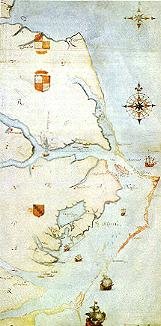
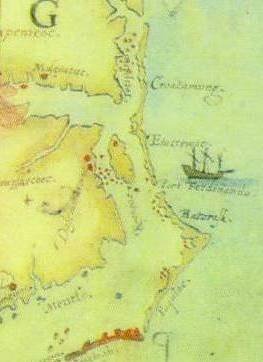
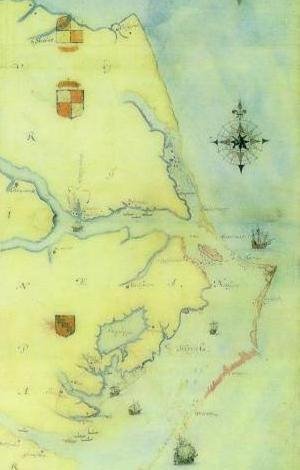
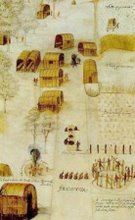
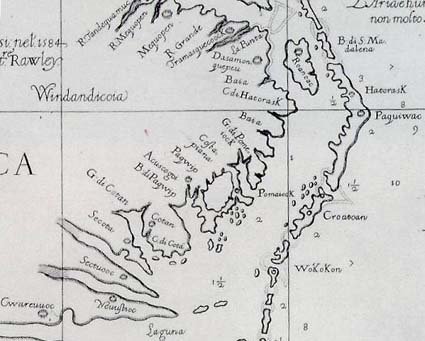
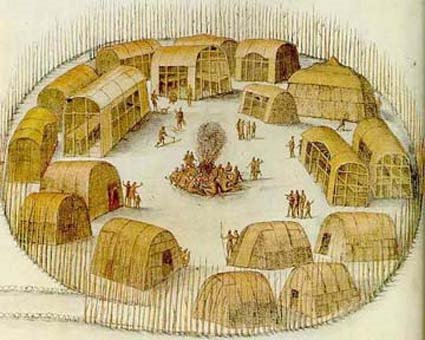
The Lost Colony of Roanoke: Did They Survive?

By Roberta Estes
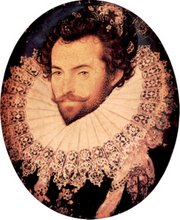
The Lost Colony of Roanoke – what an enduring mystery – for 431 years it has remained unsolved and fascinated Americans and the British, alike.
An entire tourist industry has sprung up around the mystery of the Lost Colony along the Outer Banks in North Carolina. An open-air theater tells the story every summer on Roanoke Island near where Fort Raleigh was established. Tourists drift south to Hatteras Island across a long bridge that today connects Roanoke Island to Hatteras Island, the location where the colonists themselves indicated they were moving when they left the Fort Raleigh on Roanoke Island.


Cont. here: https://dna-explained.com/2018/06/28/the-lost-colony-of-roanoke-did-they-survive-national-geographic-archaeology-historical-records-and-dna/


This blog is © History Chasers

Tuesday, September 12, 2017

Cherokee Revealed - Translated Moravian records disclose a forgotten history


Hat Tip: Laree

Cherokee Revealed - Translated Moravian records disclose a forgotten history

CHURCH MISSIONS: 19TH-CENTURY DOCUMENTS

Courtesy of Moravian Archives, Bethlehem, PA.

This map showing the settlements of the Cherokee Nation was drawn by Moravian missionary John Daniel Hammerer and is dated to 1766.


Published: September 8, 2009


In front of the house stands a long, open shed covered with clapboards adequately provided with benches and other seats, as well as a raised plank for writing on. The Talk was held under this shed. At a short distance from this stands a tall pole. A designated Indian took his position at this pole with a drum, and beat the drum as a sign of the beginning of the meeting. He kept drumming until Indians were seen coming in lines. In the heat, the Indians used turkey wings in stead of fans to make a breeze for themselves. -- Report from Abraham Steiner, a Moravian missionary to the Cherokee at Springplace, Ga., May 22, 1801, translated from the German.

This glimpse into the shared history of Moravians and Cherokees was shrouded in archaic German script for over 200 years at the Moravian Archives in Winston-Salem.

The words were found among hundreds of diaries, letters and other papers that recorded about 100 years of history between the Moravian missionaries and their Cherokee brethren. The records constitute the only known account of daily life in the Cherokee nation.

In 1992, workers began to translate and transcribe the documents. But money grew tight and work slowed on the project because the staff had to consider prioritizing other projects and possibly cutting back hours or staff, said Daniel Crews, the archivist of the Moravian Church, Southern Province.

Then earlier this year, members of the Cherokee Nation made a $125,000 grant, to be paid over five years, to translate and transcribe the documents. The archives have committed two archivists to work on the collection two days a week for the next five years, Crews said, with the hope of publishing their findings in a series of books after the work is complete.

The Cherokee Nation is made up of those people descended from ancestors who survived the Trail of Tears, the removal of the Cherokee in 1838 from the Eastern United States to the Indian Territory, which is now Oklahoma.

The Eastern Band, the Cherokee whose ancestors went into the mountains rather than accept removal, have also agreed to help pay for the project, Crews said, but have not announced how much they will donate.

The records contain details about what the Cherokee ate, how they built their villages, and the way they danced and dressed.
Jack Baker, a member of the Cherokee Nation tribal council, said that such information is available nowhere else.

Cont. here:

http://www.journalnow.com/news/local/cherokee-revealed---translated-moravian-records-disclose-a-forgotten/article_7ab2e4dc-e315-5a72-ad4d-d9d99a15db1a.html


Click here to view all recent Searching for the Lost Colony DNA Blog posts

This blog is © History Chasers

Thursday, September 7, 2017

Hurricanes on the Eastern Seaboard were Much Worse 5,000 Years Ago

We hear that hurricanes are growing worse, but that idea does not hold up under scrutiny. In fact a new technique is showing just the opposite. One can only imagine the horrors visited upon the Indians living there at the time.

According to this book; Hurricanes and Typhoons: Past, Present, and Future
by Richard J. Murnane (Editor), Kam-biu Liu (Editor)

"Paleotempestology is an emerging field of science that studies past tropical cyclone activity mainly through the use of geological proxy techniques..."

A study of the past 5,000 years reveals the past 1.000 years to have been relatively quiet.


http://www.amazon.com/reader/0231123884?_encoding=UTF8&ref_=sib_sip_pdp_pg&query=hurricane%20history#reader

http://www.amazon.com/reader/0231123884?_encoding=UTF8&ref_=sib_sip_pdp_pg&query=hurricane%20history#reader


© History Chasers

Click here to view all recent Searching for the Lost Colony Blog posts

This blog is © History Chasers

Monday, June 5, 2017

If a Tree Fell on the Eastern Shore and No One Heard it, Would there Still Be Artifacts?


EASTERN SHORE
It started with an uprooted tree in the yard, which left a big hole, which opened a window into the past.
Colonial-era clay pipes and pottery pieces. Hand-forged nails and odd yellow-ish bricks. Tiny coins – one of the oldest types of farthing. And jetons – brass tokens once used for accounting that have rarely been found in this country.
It wasn’t the first time scientists had descended on Eyreville. In 2005, an international geology team spent months on the property, coring more than a mile deep into a 56-mile-wide underground crater that was blasted by a meteor 35 million years ago.
On that deep-time calendar, the 400-year-old artifacts in the yard were left there, like, yesterday.
But in U.S. history terms, that’s significant. The so-called Contact Period spanned 1520 to 1620, the dawn of European settlement here. Rare stuff.
The jetons? They match others excavated from the oldest parts of the 1607 fort at Jamestown and at Roanoke Island, the last known location of what became the Lost Colony.
Cont. here:
This blog is © History Chasers
Click here to view all recent Lost Colony Research Group Blog posts

Thursday, August 18, 2016

Happy Birthday, Virginia Dare


 Happy Birthday,

Virginia Dare


World Atlas 

 Virginia Dare was born on August 18, 1587, the first child born in the Americas to English parents. She was born into the short-lived Roanoke Colony in what is now the U.S. State of North Carolina. What became of Virginia and the other colonists remains a mystery. The fact of her birth is known because the governor of the settlement, Virginia Dare's grandfather, John White, returned to England in 1587 to seek fresh supplies and reported it. When White eventually returned three years later, Virginia and the other colonists were gone and they were never seen from again. This painting is of her baptism ceremony. http://www.worldatlas.com/webimage/countrys/namerica/usstates/nc.htm


This blog is © History Chasers
Click here to view all recent Lost Colony Research Group Blog posts
Bookmark and Share

Monday, June 20, 2016

Archaeologists find pieces of a small medicine jar that are linked to the Lost Colony


MANTEO, N.C.
Archaeologists have found pottery pieces that could have been part of a jar belonging to a medicine maker of the Roanoke voyages, and even a member of the lost colony.

The two quarter-sized fragments, colored blue, white and brown, were buried in the soil two feet below the surface not far from The Lost Colony theater ticket house. An earthen mound believed to be a fort from the period lies 75 yards from the discovery site.

“It was an exciting find,” said Eric Deetz, an archaeologist with the First Colony Foundation who was part of the dig earlier this month. “That pottery had something to do with the Elizabethan presence on that island.”

The ointment or medicine jar would have been 3 inches tall and 1.5 inches in diameter, Deetz said. He called it the most significant piece of pottery found in the area since the 1940s.

Continued here:

http://tinyurl.com/zfporpt


This blog is © History Chasers
Click here to view all recent Lost Colony Research Group Blog posts
Bookmark and Share

Wednesday, April 20, 2016

The Life of Angus Chavers, a Confederate POW


The Life of Angus Chavers, a Confederate POW


Angus Chavers and his wife Melissa
The Life of Angus Chavers, a Confederate POW

Dr. Dean Chavers


March 12, 2013

Most of the Lumbees who fought in the Civil War were in the Confederate Army. A second smaller group of them enlisted and fought in the Union Army, which meant they could possibly face their own brothers in battle. A third group was shanghaied or hijacked to work on the batteries and breastworks (temporary fortifications) around Fort Fisher near Wilmington; they were largely treated as slaves, and were assigned to do the rough work of construction. Many of them died at Fort Fisher from diseases caused by bad water and mosquitos.


A fourth group were local boys and men who refused to be conscripted to work on the breastworks, doing the work of slaves to build barriers to keep the Union soldiers out. Henry Berry Lowrie and some of his brothers refused to be enlisted; they knew they would be in the mud, dirt, and mosquitoes building breastworks; since they refused to work on the breastworks, they were cast out and labeled as outlaws by the Robeson County, North Carolina authorities.

Read more at http://indiancountrytodaymedianetwork.com/2013/03/12/life-angus-chavers-confederate-pow-147909


This blog is © History Chasers
Click here to view all recent Lost Colony Research Group Blog posts
Bookmark and Share

Monday, August 17, 2015

Happy 428th Birthday, Virginia Dare!!!

Virginia Dare (born August 18, 1587, date of death unknown) was the first child born in the Americas to English parents, Eleanor (or Ellinor/Elyonor) and Ananias Dare. She was born into the short-lived Roanoke Colony on Roanoke Island in present-day North Carolina, USA. What became of Virginia and the other colonists has become an enduring mystery. The fact of her birth is known because the leader of the colony, Eleanor Dare's father, John White, returned to England to seek assistance for the colony. When White returned three years later, the colonists were gone.

Historical explanations

John Smith and other members of the Jamestown Colony sought information about the fate of the colonists in 1607. One report indicated that the Lost Colonists took refuge with friendly Chesapeake Indians, but Chief Powhatan claimed his tribe had attacked the group and killed most of the colonists. Powhatan showed Smith certain artifacts he said had belonged to the colonists, including a musket barrel and a brass mortar. The Jamestown Colony received reports of some survivors of the Lost Colony and sent out search parties, but none were successful. Eventually they determined they were all dead.[1]
However, in her 2000 book Roanoke: Solving the Mystery of the Lost Colony, historian Lee Miller postulated that some of the Lost Colony survivors sought shelter with a neighboring Indian tribe, the Chowanoc, that was attacked by another tribe, identified by the Jamestown Colony as the "Mandoag," but who Miller thinks were actually the Eno, also known as the Wainoke. Survivors were eventually sold into slavery and held captive by differing bands of the Eno tribe, who, Miller wrote, were known slave traders. Miller wrote that English settlers with the Jamestown Colony heard reports in 1609 of the captive Englishmen, but the reports were suppressed because they had no way to rescue the captives and didn't want to panic the Jamestown colonists. William Strachey, a secretary of the Jamestown Colony, wrote in his The History of Travel Into Virginia Britania in 1612 that, at the Indian settlements of Peccarecanick and Ochanahoen, there were reportedly two-story houses with stone walls. The Indians supposedly learned how to build them from the Roanoake settlers.[2] There were also reported sightings of European captives at various Indian settlements during the same time period.[3] Strachey wrote in 1612 that four English men, two boys, and one maid had been sighted at the Eno settlement of Ritanoc, under the protection of a chief called Eyanoco. The captives were forced to beat copper. The captives, he reported, had escaped the attack on the other colonists and fled up the Chaonoke river, the present-day Chowan River in Bertie County, North Carolina.[4][2][5] For four hundred years, various authors have speculated that the captive girl was Virginia Dare. When White left the colony in 1587, there were eighty-seven men, seventeen women and eleven children among the colonists. Virginia Dare was one of two infants born to colonists in 1587 and was the only female child in the Lost Colony.


Possible descendants

The Chowanoc tribe was eventually absorbed into the Tuscarora. The Eno tribe was also associated with the Shakori tribe and was later absorbed by the Catawba or the Saponi tribes. Today one group is known as the Haliwa-Saponi tribe. From the early 1600s to the middle 1700s European colonists reported encounters with gray-eyed American Indians or with Welsh-speaking Indians who claimed descent from the colonists.[6][7] In 1669 a Welsh cleric named Morgan Jones was taken captive by the Tuscarora. He feared for his life, but a visiting Doeg Indian war captain spoke to him in Welsh and assured him that he would not be killed. The Doeg warrior ransomed Jones and his party and Jones remained with their tribe for months as a preacher.[6] In 1701, surveyor John Lawson encountered members of the Hatteras tribe living on Roanoke Island who claimed some of their ancestors were white people. Lawson wrote that several of the Hatteras tribesmen had gray eyes.[7] Some present-day American Indian tribes in North Carolina and South Carolina, among them the Coree and the Lumbee tribes, also claim partial descent from surviving Roanoke colonists. A non-profit organization, the Lost Colony of Roanoke DNA Project, has launched a Lost Colony DNA Project to test possible descendants.
Copyright (c) 2008 History Chasers
Permission is granted to copy, distribute and/or modify this document
under the terms of the GNU Free Documentation License, Version 1.2
or any later version published by the Free Software Foundation;
with no Invariant Sections, no Front-Cover Texts, and no Back-Cover Texts.
A copy of the license is included in the section entitled "GNU
Free Documentation License".
http://en.wikipedia.org/wiki/Wikipedia:Text_of_the_GNU_Free_Documentation_License


This blog is © History Chasers
Click here to view all recent Lost Colony Research Group Blog posts
Bookmark and Share

Tuesday, April 21, 2015

A fascinating look at "Old Hatteras Island"

A fascinating look at "Old Hatteras Island"

My grandfather was Luther Frazier Peele (1905-'67) ~  his mother was Elizabeth Gaskill Peele; Granny Lizzy was the last of our family to keep in contact with relatives back in the old country (Cornwall, UK).  According to our ancestry search, my grandfather's family dates back to the 1700's on the "Carolina Banks". His g-g-g...grandfather Robert Peel, was born in England in 1635 and was "spirited" away to theKing's Virginian colonies soon thereafter. Hatteras has long been a destination for people "on the lamb." During the 17th century, thousands of Irish & Scots were imprisoned in Britain by Oliver Cromwell's ethnic-cleansing tirades. The ones who survived (about half), were "transported" to the colonies. Scottish prisoners were allowed to choose their final destination ~ the grim prospect of working as a plantation slave in Barbados & Virginia drove some to Hatteras. It is unclear whether they came of their own free will (w/ livestock) or came to hide ended up staying. The village elders seemed peculiar to outsiders because of their antiquated vocabulary and thick brogue... and the women, who were sturdy by necessity, often smoked pipes or dipped snuff. 

Cont. here: http://hatterasgear.com/oldhatte.html

This blog is © History Chasers
Click here to view all recent Lost Colony Research Group Blog posts

Sunday, February 22, 2015

Sunday, January 18, 2015

2015 Top 100 Genealogy Sites Announced


The annual GenealogyInTime Magazine Top 100 is the definitive list in genealogy. It profiles and ranks the best ancestral websites based on estimates of their internet traffic (as measured by Alexa, the internet traffic people). This results in a list that is objective and comprehensive.
This year represents our fourth annual survey on the state of genealogy. Discover some interesting websites to help you find your ancestors and stay up to date with the latest trends in genealogy.

- See more at: http://www.genealogyintime.com/articles/top-100-genealogy-websites-of-2015-page01.html#sthash.7mcIUymD.dpuf


http://www.genealogyintime.com/articles/top-100-genealogy-websites-of-2015-page01.html


This blog is © History Chasers
Click here to view all recent Lost Colony Research Group Blog posts
Bookmark and Share

Friday, September 5, 2014

Sunday, August 3, 2014

The Croatan Indians of Sampson County, North Carolina.


George Edwin Butler, 1868-1941
The Croatan Indians of Sampson County, North Carolina. Their Origin and Racial Status. A Plea for Separate Schools.
Durham, N.C.: Seeman Printery, 1916.

NEW BETHEL INDIAN SCHOOL
Herrings Township, Sampson Co., N. C.


http://docsouth.unc.edu/nc/butler/ill1.html

This blog is © History Chasers
Click here to view all recent Lost Colony Research Group Blog posts
Bookmark and Share

Saturday, July 26, 2014

Remains of the earliest European fort in the present day US interior discovered


The remains of the earliest European fort in the interior of what is now the United States have been discovered by a team of archaeologists, providing new insight into the start of the U.S. colonial era and the all-too-human reasons spoiling Spanish dreams of gold and glory.

Spanish Captain Juan Pardo and his men built Fort San Juan in the foothills of the Appalachian Mountains in 1567, nearly 20 years before Sir Walter Raleigh’s “lost colony” at Roanoke and 40 years before the Jamestown settlement established England’s presence in the region.
“Fort San Juan and six others that together stretched from coastal South Carolina into eastern Tennessee were occupied for less than 18 months before theNative Americans destroyed them, killing all but one of the Spanish soldiers who manned the garrisons,” said University of Michigan archaeologist Robin Beck.
Beck, an assistant professor in the U-M Department of Anthropology and assistant curator at the U-M Museum of Anthropology, is working with archaeologists Christopher Rodning of Tulane University and David Moore of Warren Wilson College to excavate the site near the city of Morganton in western North Carolina, nearly 300 miles from the Atlantic Coast.
The Berry site, named in honor of the stewardship of landowners James and the late Pat Berry, is located along a tributary of the Catawba River and was the location of the Native American town of Joara, part of the mound-building Mississippian culture that flourished in the southeastern U.S. between 800 and about 1500 CE.
www.heritagedaily.com/2013/07/oldest-european-fort-in-the-inland-us-discovered-in-appalachians/96621

This blog is © History Chasers
Click here to view all recent Lost Colony Research Group Blog posts
Bookmark and Share

Sunday, March 30, 2014

Jennifer Gabriel Powell


It is with great sadness and very heavy hearts that Anne Poole and Roberta Estes, directors of the Lost Colony Research Group, convey the heartbreaking message that we have lost our own Jennifer Gabriel Powell.  Jenn is the archaeologist for the Lost Colony Research Group, but she was so much more.  Jenn met Andy Powell, now Andy Gabriel Powell, retired mayor of Bideford, England, on our dig in 2012.  Three months later, she went to England to visit Andy, and suffice it to say she never came back, except to get her visa and her cat.  She and Andy married on January 19, 2013. 

Jenn was just 34, completed her BS in archaeology in 2012, was lovely, brilliant and joyful.  She had her whole life in front of her.  We all loved Jenn and remember her laughing in her signature tie dye t-shirts that she made herself.  Jenn and Andy are both members of our Lost Colony family.

Yesterday, Jenn suffered a brain hemorrhage and today, after her mother arrived from the US, life support was discontinued and Jenn slipped away.  Our hearts grieve for two of our own, Jenn’s passing and Andy’s terrible loss.  Please light a candle and say a prayer for Jenn, Andy, Jenn’s parents and family.  We will have a memorial article for Jenn in the upcoming Lost Colony Research Group newsletter.


This blog is © History Chasers
Click here to view all recent Lost Colony Research Group Blog posts
Bookmark and Share

Monday, February 17, 2014

Jamestown Mysteries Solved By Archeological Finds


Published on Jan 28, 2014 The Jamestown Rediscovery archaeologists over the years have come across several instances of disarticulated human skeletal remains in trash pits. This short film documents one such find. A skull fragment found in the fort's west bulwark ditch demonstrated clear evidence of an attempt at trephination (a surgical procedure performed in response to head injuries, whereby surgeons remove a plug of bone form the skull to prevent a buildup of fluid that could cause pressure on the brain). The research that is presented in this film was the result of a collaboration between the Smithsonian Institution and the Jamestown Rediscovery Project. Senior Staff Archaeologist, Jamie May of the Rediscovery Project narrates the film. This blog is © History Chasers
Click here to view all recent Lost Colony Research Group Blog posts
Bookmark and Share

Thursday, February 13, 2014

Today's Nature Publication Refutes Possibility of a Solutrean Migration to the Americas


A very exciting and definite paper has just been published by Naturetoday, titled “The genome of a Late Pleistocene human from a Clovis burial site in western Montana,” by Rasmussen et al. The authors conclude that the DNA of a Clovis child is ancestral to Native Americans.  Said another way, this Clovis child was a descendant, along with Native people today, of the original migrants from Asia who crossed the Bering Strait.

All four types of DNA were tested; Y chromosome, mtDNA, autosomal and X. Everything tested as having come through the Bering Strait from Asia. There was no European admixture.  

This information is very important to a number of academic disciplines. I am sure much more remains to be explored and explained, but we can rest assured in this fact: 


"The researchers concluded that the Clovis infant belonged to a meta-population from which many contemporary Native Americans are descended and is closely related to all indigenous American populations.  In essence, contemporary Native Americans are “effectively direct descendants of the people who made and used Clovis tools and buried this child,” covering it with red ochre.
Furthermore, the data refutes the possibility that Clovis originated via a European, Solutrean, migration to the Americas."


http://dna-explained.com/2014/02/13/clovis-people-are-native-americans-and-from-asia-not-europe/

www.the-scientist.com/?articles.view/articleNo/39153/title/First-Ancient-North-American-Genome-Sequenced/


This blog is © History Chasers
Click here to view all recent Lost Colony Research Group Blog posts
Bookmark and Share

Sunday, December 22, 2013

Please sign this petition to preserve Hatteras Lighthouse Keeper Stones

 Letter by Dawn Taylor

We the descendants of those who manned the Historic Cape Hatteras Light Station located on North Carolina's Outer Banks and citizens of the United States,are petitioning NC Congressman Walter Jones and the National Park Service to preserve and protect the original granite foundation stones which bear the names and dates of our forefathers who honorably gave of themselves to provide those at sea a beacon in which to safely navigate the dangerous waters known as the Graveyard of the Atlantic.

In 1999, the Cape Hatteras Lighthouse was moved back 1,600 feet to protect it from the encroaching Atlantic Ocean.After the move the Outer Banks Lighthouse Society spent almost $12,000 to have the original granite stones which had been cut away from the lighthouse foundation, engraved with the names and dates of all of the keepers of the Hatteras light. The stones were then arranged in a circle to mark the original location of the historic lighthouse.

Over the years, due to coastal storms,this historic site which mean so much to the keeper descendants and lighthouse enthusiast alike,has been covered with sand and the stones scattered around by waves. Just as the lighthouse was moved for preservation's sake, we want these stones to also be maintained and protected from the sea.They represent such a large part of our island's heritage and history.

In May of 2013, in a letter to the Outer Banks Lighthouse Society, seashore superintendent Barclay Trimble said, “Because of coastal processes, namely shoreline erosion and dune migration, the stones have routinely become covered with sand requiring substantial effort to keep them uncovered.”

The National Park Service has also responded by stating that it no longer intends to keep maintaining the stones due to it being no longer practical to keep uncovering and rearranging the stones after each storm. To most, this is an unacceptable answer.

Each year,especially through peak tourist season, thousands visit the lighthouse per day and purchase Climbing Tour Tickets at $8 for adults and $4 for senior citizens. It is not hard to do the math and to see that indeed, there are funds out there to preserve the site we are petitioning.

These original Cape Hatteras Lighthouse Foundation Stones located at the original lighthouse site,with the names of our forefather's etched in their remembrance, should be preserved. We the lighthouse descendants and all who cherish and honor it's existence are hereby joining together by the creation of this petition to make our voices heard and to see  that these cherished stones will still be there for future generations to visit, just as we have.

Signed...

Dawn Farrow Taylor
President - Cape Hatteras Genealogical and Preservation Society

https://www.change.org/petitions/nc-congressman-walter-jones-and-the-national-park-service-cape-hatteras-to-maintain-preserve-and-protect-the-original-foundation-keeper-stones-located-at-the-site-of-the-cape-hatteras-lighthouse


Bookmark and Share
This blog is © History Chasers
Click here to view all recent Lost Colony Research Group Blog posts

Sunday, November 24, 2013

Which First Thanksgiving?


No. 1. In 1586, the first thanksgiving held by Englishmen on the North American continent took place on Roanoke Island, North Carolina. This celebration was by the company of 100 men from Cornwall, England that Sir Walter Raleigh had brought to America to found a colony. After a year when the relief ship arrived, they held a thanksgiving dinner, and fed-up with the hardships and perils, they all went home.

No. 2. In 1609, at Jamestown, Virginia, the starving remnants of the first settlers held a thanksgiving dinner while awaiting the arrival of their relief ship.

No. 3. In 1612, also at Jamestown, Virginia, a dinner was held after the arrival of Governor Dale with a ship-load of girls intended to become the wives of the settlers.

No. 4. In 1619, a dinner of thanks was held at Berkley Plantation on the James River in Virginia.

No. 5. In 1621, at Plymouth Plantation, a great dinner of thanks was held. Pilgrim Edward Winslow in a letter of December 11, 1621, to a friend in England, described their First Thanksgiving (as printed in Mourt's Relation) as follows.

"Our harvest being gotten in our Governor sent four men on fowling, so we might after a more special manner rejoice together, after we had gathered the fruit of our labors. They, four, in one day killed as much fowl as with a little beside, served the company almost a week. At which time amongst other recreations, we exercised our arms, many of the Indians coming amongst us, and amongst the rest their greatest King Massasoit with some 90 men, whom for three days we entertained and feasted. And they went out and killed five deer which they brought to the Plantation, and bestowed on our Governor, and upon the Captain and others."
This latter Thanksgiving dinner is the one that has survived and became the National Holiday.


© History Chasers Click here to view all recent Historical Melungeons Blog posts Bookmark and Share

Enter your email address to start receiving this blog in your inbox


Enter your email address:
Delivered by FeedBurner