Pages

Wednesday, April 7, 2010

On the Road Again with Roberta


Bunn,NC


Yes, there is such a place as Bunn, NC. Now I just know I’m about to get in some kind of trouble for this, but I just can’t help myself. I drove through Bunn for the first time last year, and this year, when I drove through for the second time, well, I just had to take some photos.

First, you come across the Bunn Rescue. Now I have to ask myself, is that what happens when there is a fire….the Bunns get too toasty and the rescue has to come out to be sure they are only lightly browned????
Next, you come across the Bunn Wash……no…..I’m not kidding. And see, there is someone outside preparing to wash their bunns. I wonder how that is accomplished, exactly…..without the bunns getting soggy. So many questions…..
Next door to the Bunn Wash is Bunn Beach Bingo, and only adults can enter. Truly….I could not make this up. I have no idea what Bunn Beach Bingo is. I can only imagine….and every scenario I can imagine is quite funny. They weren’t open, so I couldn’t go inside to check this out….but it might be worth going back for.

On down the road are the Bunn Schools. That’s where the little Bunns rise and become bigger Bunns.

The Bunn schools are right across from the Bunn Fire Department. Of course, you only meet those guys if your Bunns are too hot and get out of control. These would be those Bunn control guys…..along with Bunn Rescue of course if your bunns get burnt.

On down the street we have Bunn Crossing. Now Bunn Crossing brings to mind those signs of “children crossing’, except in the Bunn Crossing sign, you’d have several kinds of Bunns crossing the street, probably going to the Bunn Schools.
Bunn Crossing would be the ideal place for a bakery, which of course would be called “Hot Crossed Bunns” and my favorite, a coffee shop which would have to be called the “Bunn Warmer”.

I don’t think I’ve had so much fun in just a single mile before. It was a good place to take a break and give my bunns a rest from driving! So I’m wondering…..if you live in Bunn, are you a Bunnite, or on Easter, a Bunney???


This blog is © History Chasers

Click here to view all recent Searching for the Lost Colony DNA Blog posts

Bookmark and Share

On the Road Again with Roberta


Carolina Back Roads
Monday 4-5-2010

The North Carolina back roads are so beautiful in the spring. I saw baby calves, looking to be just born and beautiful verdant green. Coming down the south side of Pilot Mountain, there were leaves on the trees, but on the north side, just buds. I could literally see where spring was paused and painting with her artist’s palette today. Tomorrow, probably the north side. Spring is a busy lady!!! Near Wake Forest on 98, I saw an amazing sight. Wisteria, not like a small vine we have at home, but WISTERIA in all caps. Indeed, Wisteria like I’ve never seen it before. I had been marveling at the redbuds, poking their heads out into the manicured areas beside the roads like curious children peeping around their mother’s skirts, adding a much needed splash of color for our winter-time color-deprived psyches. First, I saw a single Wisteria vine that had worked its way up a utility pole and wished I had been in a position to take a photo, but then on down the road a bit, I found an incredible stand of Wisteria….utterly stunning…..words can’t even begin to do it justice. I did manage to pull over and take photographs on a vanishingly small shoulder.
This blog is © History Chasers

Click here to view all recent Searching for the Lost Colony DNA Blog posts

Bookmark and Share

Tuesday, April 6, 2010

On the Road Again with Roberta


On the way to North Car
olina again for more research, I’m inviting you along. I’ll keep in touch by posting blog entries as I go. Today, we’re driving from cold and dreary Michigan to a sunny and warm Beckley, West Virginia where it hit 80 today and things are really blooming. No, I mean REALLY blooming, as in the flowers and trees are in bloom. Given that just a few hours drive north, it’s still brown and glum, this is truly a sight for sore eyes. I love driving south in the spring and watching spring arrive in fast forward hour by hour as I drive further and further south. If you’re in West Virginia and you see a really unusual building that looks kind of like a crown sitting on an orange UFO while driving down 77 near 64 (exit 44) at Beckley, it might be Tamarack…..in fact, it surely is. Tamarack is the “must see” feel good place of all feel good places. I’ve stopped here for years at least once or twice a year and it’s always different. Known as “The Best of West Virginia”, it truly earns its name by exhibiting (and selling) the handcrafts and fine arts of West Virginia artisans. But wait, there’s more. Not only is it a wonderland of talent and beauty, it also has food prepared by Greenbrier’s cooking school chefs. And ice cream, and coffee, and a conference center, and an art gallery, and tigers and lions and bears OH MY!!! Sorry, got a bit carried away. But you get the idea. Visit during the week and you’ll get to see the artists in residence at work, a potter, woodworker, ironworker, glass blower and a quilter. My favorite is Elaine Bliss, the quilter, but that’s because I’m a quilter. More about that later in the week. Elaine isn’t just a quilter, but she is a fabulous quilter….but then what else would you expect, being THE quilter at Tamarack, The Best of West Virginia!! Here’s a picture of one of Elaine’s signature wall-hangings available at this link to purchase. Take a look at all of her wonderful creations.

Here’s Tamarack’s website, so go ahead, take a virtual vacation and give yourself a sensory treat.

This blog is © History Chasers

Click here to view all recent Searching for the Lost Colony DNA Blog posts

Bookmark and Share

Wednesday, March 17, 2010

Tuesday, March 9, 2010

23andMe Half Price Sale


23andMe is being offered at half price for the rest of this month.

https://www.23andme.com/partner/foa/

This blog is © History Chasers

Click here to view all recent Searching for the Lost Colony DNA Blog posts

Bookmark and Share

Tuesday, March 2, 2010

Where Have all the Indians Gone?


by Janet Crain


There was some misunderstanding when this paper first appeared that the author was saying some of the groups studied such as the Melungeons had no Indian ancestry. That was not the intent. If the entire JoGG paper is read it will become clear that this is a very serious, perhaps the first in some aspects, effort to explain why we are not seeing the Native American genetic testing results we would expect.

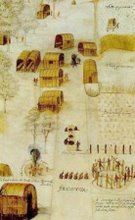
Where Have All the Indians Gone? Native American Eastern Seaboard Dispersal, Genealogy and DNA in Relation to Sir Walter Raleigh’s Lost Colony of Roanoke.

Roberta Estes

Abstract


Within genealogy circles, family stories of Native American1 heritage exist in many families whose American ancestry is rooted in Colonial America and traverses Appalachia. The task of finding these ancestors either genealogically or using genetic genealogy is challenging.


With the advent of DNA testing, surname and other special interest projects2, tools now exist to facilitate grouping participants in a way that allows one to view populations in historical fashions. This paper references and uses data from several of these public projects, but particularly the Melungeon, Lumbee, Waccamaw, North Carolina Roots and Lost Colony projects3.


The Lumbee have long claimed descent from the Lost Colony via their oral history4. The Lumbee DNA Project shows significantly less Native American ancestry than would be expected with 96% European or African Y chromosomal DNA. The Melungeons, long held to be mixed European, African and Native show only one ancestral family with Native DNA5. Clearly more testing would be advantageous in all of these projects.


This phenomenon is not limited to these groups, and has been reported by other researchers such as Bolnick (et al, 2006) where she reports finding in 16 Native American populations with northeast or southeast roots that 47% of the families who believe themselves to be full blooded or no less than 75% Native with no paternal European admixture find themselves carrying European or African y-line DNA. Malhi (et al, 2008) reported that in 26 Native American populations non-Native American Y chromosomal DNA frequency as high as 88% is found in the Canadian northeast, southwest of Hudson Bay. Malhi’s conclusions suggest that perhaps there was early1 introduction of European DNA in that population.


The significantly higher non-Native DNA frequency found among present day Lumbee descendants may be due in part to the unique history of the Eastern seaboard Indian tribes of that area or to the admixture of European DNA by the assimilation of the Lost Colony of Roanoke after 1587, or both.


European contact may have begun significantly before the traditionally held dates of 1492 with Columbus’ discovery of America or 1587 with the Lost Colony of Roanoke which is generally and inaccurately viewed as the first European settlement attempt. Several documented earlier contacts exist and others were speculated, but the degree of contact and infusion of DNA into the Native population is unknown.


Wave after wave of disease introduced by European and African contact and warfare decimated the entire tribal population. Warfare took comparatively more male than female lives, encouraging the adoption of non-Indian males into the tribes as members or guests. An extensive English trader network combined with traditional Native American social practices that encouraged sexual activity with visitors was another avenue for European DNA to become infused into Eastern seaboard tribes.


1 Native, Native American, American Indian and Indian are used interchangeably to indicate the original inhabitants of North American before the European colonists arrived.

2 Available through Family Tree DNA, www.familytreedna.com

3 See Acknowledgement section for web addresses of the various projects. Note that participants join these projects voluntarily and are not recruited for specific traits as in other types of scientific studies. Some projects, such as the Lost Colony projects, screen applicants for appropriateness prior to joining. For the join criteria, please see the FAQ at http://www.rootsweb.ancestry.com/~molcgdrg/faqs/faq3.htm.

4 The oral history exists tribe-wide, but specifically involves Virginia Dare and the colonists Henry and Richard Berry. Genealogies are relatively specific about the line of descent.

5 The Melungeon DNA project, while initially included in this research, was subsequently removed from the report because of the lack of Native American ancestry and no direct connection to the Lost Colonists. The Lumbee may be connected to the Melungeons, but that remains unproven.


Eastern Seaboard Native Americans


The genealogies of many families contain oral histories of Native ancestors. With the advent of genealogical DNA testing, confirmation of those long-held and cherished family stories about Native American ancestors can now be confirmed or denied, assuming one can find the right cousin and persuade them to test. Many surprises await DNA participants, and not always positive surprises if the search is for Native American ancestors. Those who are supposed to be, aren’t, and occasionally a surprise Native American ancestor appears via the announcement of their haplogroup.


What DNA testing offers to the genealogist, it also offers to the historian. With the advent of projects other than surname projects, meaning both geographically based projects and haplogroup projects, historians are offered a new way to look at and compare data.


Excellent examples of this type of project are the Lumbee, East Carolina Roots, Melungeon and Waccamaw projects.


A similar project of significantly wider scope is the 1587 Lost Colony of Roanoke DNA project. When the author founded the project in early 2007, it was thought that the answer would be discovered relatively quickly and painlessly, meaning that significant cooperation and genealogical research from local families would occur and that the surnames and families in England would be relatively easy to track. Nothing could be further from the truth. The paucity of early records in the VA/NC border region combined with English records that are difficult to search, especially from a distance, are located in many various locations and are often written in Latin has proven to be very challenging. The Lost Colony project has transformed itself into a quest to solve a nearly 425 year old mystery, the oldest “cold case” in America. However, this is not the first attempt. Historical icons David Beers Quinn (1909-2002) and William S. Powell devoted their careers to the unending search for the colonists, both here in the US in terms of their survival and in Great Britain in terms of their original identities. However, neither of those men had the benefit of DNA as a tool and we are building upon their work, and others.


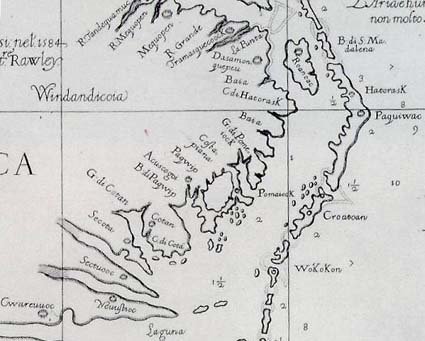
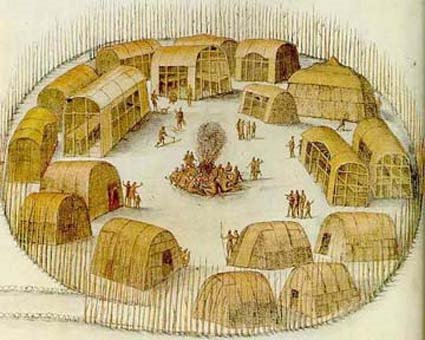
One cannot study the Lost Colonists, referred to here as colonists, without studying the history of the eastern North Carolina area in general including early records, the British records and critically, the history of the Native people of the Outer Banks area of North Carolina. A broad research area in the early years (pre-1700 to as late as 1750), would be defined as coastal North Carolina and Virginia and into South Carolina in the later years (1712 to about 1800). Initially both Carolinas were in fact Virginia, North Carolina being formed in 1663 as Carolina. When South Carolina split off in 1712, the States of both North and South Carolina were created from the original Carolina.


Copyright 2009, all rights reserved, accepted for publication at JoGG

Roberta@dnaexplain.com or robertajestes@att.net


Figure 5: http://www.nationmaster.com/encyclopedia/Image:Algonquian-langs.png

Read the entire paper here:

http://www.jogg.info/52/index.html

There are 4 supplementary files with a lot of good data in there as well.

This blog is © History Chasers

Click here to view all recent Searching for the Lost Colony DNA Blog posts

Bookmark and Share

Monday, March 1, 2010

Watch the Big DNA Reveal Wednesday Night

by Janet Crain

Faces of America
in which Henry Louis Gates Jr., Harvard Scholar, used standard genealogy as well as the latest cutting edge DNA techniques to investigate the genealogy background of twelve famous Americans will culminate Wednesday night March 3th.

Professor and poet Elizabeth Alexander, chef Mario Batali, comedian Stephen Colbert, novelist Louise Erdrich, journalist Malcolm Gladwell, actress Eva Longoria, musician Yo-Yo Ma, director Mike Nichols, Her Majesty Queen Noor, television host/heart surgeon Dr. Mehmet Oz, actress Meryl Streep, and figure skater Kristi Yamaguchi have each received several surprises along the way.

Be sure and watch Wednesday night as this final episode promises to reveal the DNA findings.


This blog is © History Chasers

Click here to view all recent Searching for the Lost Colony DNA Blog posts

Bookmark and Share

WDYTYA Debuts in America Friday March 5th

Four years ago, Lisa Kudrow was in Ireland filming P.S. I Love You when she saw the TV show Who Do You Think You Are? in which celebrities trace their ancestors.

Olympic hurdler Colin Jackson was tracing his family history back to Jamaica and Panama.

'Even though I'd never seen the show before, I was hooked,' she says.

'I watched more episodes and the stories were riveting. I wondered if we could do a show like this in the States.'

Lisa Kudrow

New friend: Lisa Kudrow discovered her Polish relatives and their tragic history and plans to take her husband and 11-year-old son to meet them

Her idea took off - next week, the U.S. begins screening its version, which promises to be as fascinating as the Bafta-nominated BBC series.

'When we started looking for celebrities, plenty were interested, but weren't sure they had an interesting background,' says Lisa, best-known as Phoebe Buffay in Friends.

'Sarah Jessica Parker was intrigued, but said: "Good luck - you won't find anything." '

Yet the programme not only discovered she had an ancestor who participated in the famed 19th-century California Gold Rush, but another was accused of witchcraft in the 1692 Salem witch trials.

Her husband Matthew Broderick, another of the show's subjects, found that his grandfather was a 22-year-old medic in World War I who had to tend to soldiers in the thick of the action. He was wounded and awarded the Purple Heart.

Broderick says: 'And I'd always thought of him as Joe the postman.'

Susan Sarandon learned her maternal grandmother had been pregnant and married by the time she was 13 and bigamy is hinted at, too.

But perhaps most astonishingly, Brooke Shields is descended from French royalty.

Having believed her family was descended from Italian aristocracy (one ancestor was the banker to the Vatican), she was stunned at being directly descended from Henry IV of France, with Louis XIV a cousin many generations removed.

Despite thinking she had an Italian heritage, when she was growing up, Brooke was always interested in French culture and studied French literature at university.

'She wondered if her lineage had some bearing on that,' says Lisa. 'It's those tiny, weird little connections to the past that make the show so interesting.'

Brooke also learned why her grandmother, Teresa, seemed so 'bitter, sad and afraid' and treated Brooke's mother, Teri, badly - researchers discovered Teresa had lost her own mother at the age of ten.

Having become the mother figure to her siblings, Teresa lost a brother in a drowning accident. The grief took its toll and Brooke's mother ended up running away.

Teresa's grievance towards her daughter may have been unfair, but Brooke now understands her grandmother better after piecing together her tragic life.

Lisa herself makes a journey to eastern Europe to uncover a story horribly familiar to Jewish families who lived through World War II.

You can read about it here:


This blog is © History Chasers

Click here to view all recent Searching for the Lost Colony DNA Blog posts

Bookmark and Share

Wednesday, February 17, 2010

Faces of America pt. 2 Tonight Feb. 17th

The second episode in the Faces of America series airs Wed. night, February 17th on PBS.

About the Program

What made America? What makes us? These two questions are at the heart of the new PBS series Faces of America with Henry Louis Gates, Jr. The Harvard scholar turns to the latest tools of genealogy and genetics to explore the family histories of 12 renowned Americans — professor and poet Elizabeth Alexander, chef Mario Batali, comedian Stephen Colbert, novelist Louise Erdrich, journalist Malcolm Gladwell, actress Eva Longoria, musician Yo-Yo Ma, director Mike Nichols, Her Majesty Queen Noor, television host/heart surgeon Dr. Mehmet Oz, actress Meryl Streep, and figure skater Kristi Yamaguchi.


This blog is © History Chasers

Click here to view all recent Searching for the Lost Colony DNA Blog posts

Bookmark and Share

Sunday, February 14, 2010

Stephen Colbert Learns He is the Whitest Person Ever DNA Tested

Henry Louis Gates Jr. goes on the Stephen Colbert show to inform him he is the whitest person ever DNA tested. Great satire!!! Humorous look at DNA testing. Stephen was among several celebrities tested as part of the Faces of America genealogy series. The first episode appeared February 10th. The second episode will air Wed. night February 17th at 7 CST 8 EST. But be sure and check your local listings.


Henry Louis Gates, Jr.
The Colbert ReportMon - Thurs 11:30pm / 10:30c
www.colbertnation.com
Colbert Report Full EpisodesPolitical HumorSkate Expectations


This blog is © History Chasers

Click here to view all recent Searching for the Lost Colony DNA Blog posts

Bookmark and Share